7 Best Patio Doors for Homes and Businesses
Patio doors do more than connect a room with a deck, garden, or courtyard. They shape daylight, circulation, views, privacy, and the way a space feels during everyday use. For homeowners, the right style can make a compact room feel more open. For businesses, it can help guide customers toward an outdoor dining area or a welcoming entrance. But appearance is only part of the decision. Good fit matters.
Opening width, frame material, glass performance, security hardware, accessibility, and maintenance all deserve attention. A sliding door may suit a narrow wall, while hinged or folding designs need more clearance. Local weather matters too: wind, rain, strong sun, and seasonal temperature changes can affect comfort and upkeep. It is easy to focus on the glass and overlook the threshold; that small detail may become annoying every day. Details count.
This guide explores seven patio door options for homes and businesses, including familiar sliding styles and designs that create wider openings. Each option brings different benefits, costs, and practical trade-offs. A door that looks impressive in a showroom may not suit a busy kitchen, a small patio, or a commercial entrance with frequent foot traffic. Measure the opening, consider how people will use it, and check product specifications before choosing. There is no universal winner. The best choice is the one that fits the space, climate, budget, and daily routine—and still feels right after the novelty wears off.
Understanding Patio Doors and Their Uses in Homes and Businesses
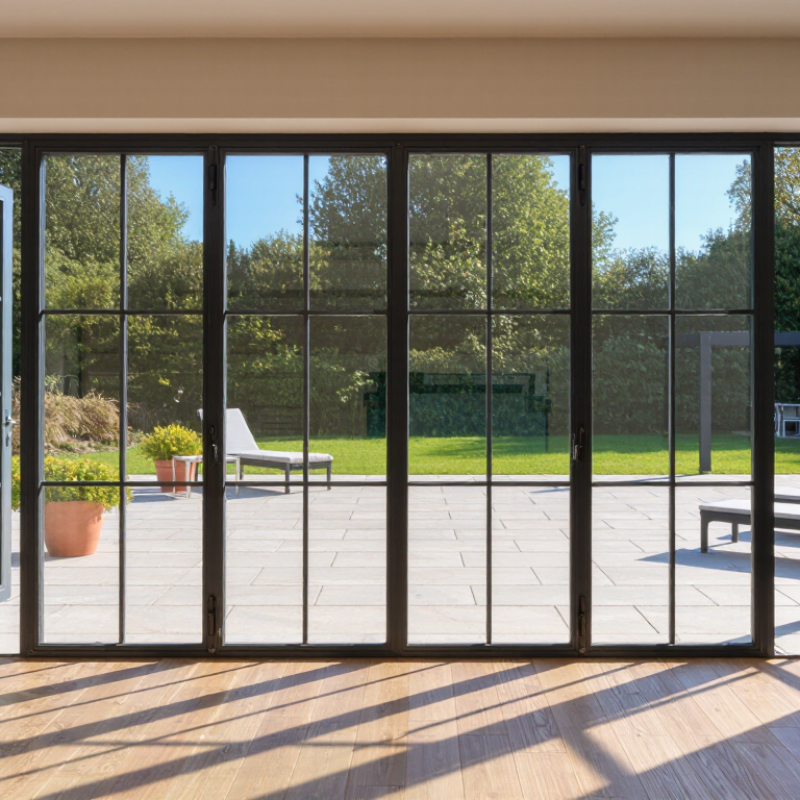
Patio doors connect indoor rooms with decks, gardens, or outdoor seating areas. In homes, they can bring daylight into kitchens and living rooms while making everyday access easier. Sliding doors suit narrow rooms because their panels move along a track instead of swinging inward. Hinged or French-style doors offer a wider opening, but need clear floor space. Small detail, big difference.
Businesses use patio doors to link dining areas, courtyards, or customer lounges. A restaurant may value a broad opening for busy service, while an office might prioritize quiet operation and steady temperature control. Folding panels can create a generous opening, though their tracks and moving parts need regular attention. They are not automatically the best choice.
Before selecting a door, measure the opening and consider who will use it each day. A low threshold can help with carts, strollers, or mobility devices, but water management still matters. Look closely at the sill, drainage, seals, and glass specifications, especially in exposed locations. A door that feels smooth in a showroom may behave differently after dust, rain, and frequent use. I would also question whether maximum glass area is worth the extra cleaning and heat gain. Comfort, privacy, security, and maintenance all deserve a place in the decision.
Key Factors for Evaluating Patio Door Styles
When evaluating patio door styles, start with the room and the way people use it. Measure the full opening, nearby furniture, and the path from indoors to outside. A sliding door needs clear wall space for its fixed panel, but its moving panel does not swing into a dining area. That can matter when chairs sit close to the glass. A good fit.
French doors create a wider opening when both panels swing out, yet they need a clear landing outside. Check for steps, narrow decks, or planters that could block the swing. In busy homes or businesses, consider how easily visitors can move through the doorway, especially when carrying bags or serving trays. Small details matter.
Compare glazing, frame materials, and upkeep alongside appearance. Double-pane glass can improve insulation, though performance depends on the full door assembly and installation. Look for clear information about weather seals, drainage, and hardware access. A sturdy frame is not enough if water collects in the track. For sunny rooms, assess heat gain and glare at different times of day; showroom lighting can be misleading. Security features should include dependable locks and a frame that fits the opening correctly. Even a carefully chosen style can disappoint if measurements or installation are rushed.
7 Best Patio Doors for Homes and Businesses - Key Factors for Evaluating Patio Door Styles
| Patio Door Style | How It Opens | Space Needed | Typical Opening | Key Advantages | Potential Drawbacks | Relative Cost | Best Suited For |
|---|---|---|---|---|---|---|---|
| Sliding Patio Door | One or more panels slide horizontally along tracks; some panels may be fixed. | Little indoor or outdoor swing space; requires clear wall space beside the opening. | Commonly available in two- or three-panel configurations; actual widths depend on the opening and manufacturer. | Space-efficient, easy to operate, and provides broad glass views. Often a practical choice for everyday residential use. | The clear opening is usually narrower than the full frame because panels overlap. Tracks need periodic cleaning. | Low to moderate | Homes, apartments, patios, and business spaces where saving floor space is important. |
| French Hinged Patio Door | A pair of side-hinged panels swings inward or outward; one panel may be secured while the other is used regularly. | Needs clear swing space on the chosen side. | Typically configured as a double-door opening; custom sizes are available for wider entrances. | Opens widely for moving furniture or foot traffic and offers a traditional, symmetrical appearance. | Open panels can obstruct walkways or furniture. Weather sealing and alignment depend on careful installation. | Moderate | Homes and hospitality spaces with enough clearance and a preference for a classic look. |
| Single Hinged Patio Door | One panel swings inward or outward on side hinges. | Requires swing clearance, but less than a double-door arrangement. | Usually used for a standard single-door opening; larger or narrower sizes may be available by configuration. | Simple operation and a straightforward entry point. Can suit smaller patios or secondary exits. | Provides a smaller passage than multi-panel styles and may be inconvenient where space is tight. | Low to moderate | Compact homes, utility areas, or business back entrances with limited opening width. |
| Bi-Fold Patio Door | Multiple hinged panels fold and stack to one or both sides of the opening. | Needs room for the stacked panels and clear floor space near the opening. | Usually selected for wider openings; the number and width of panels are configured to fit the project. | Can create a broad opening between indoor and outdoor areas and works well for entertaining or high-traffic transitions. | More panels and hardware can mean more adjustment and maintenance. Threshold and weather-sealing details matter. | High | Large residential openings, restaurants, and venues seeking a flexible indoor-outdoor connection. |
| Multi-Slide Patio Door | Several panels slide along parallel tracks; panels may stack at one end or slide into a wall pocket. | Needs track space; pocket versions require a suitable wall cavity. | Designed for wide openings, with panel count and configuration set to suit the project. | Offers expansive glass areas and a wider opening than many conventional sliding configurations. | Requires careful planning, accurate installation, and more track space. Larger systems can be costly. | High | Modern homes, event spaces, and commercial properties with large exterior openings. |
| Pocket Sliding Patio Door | A sliding panel retracts into a pocket built into the adjacent wall. | Does not occupy floor space when open, but needs a wall cavity that can accommodate the panel. | Opening size depends on the wall design and door system; pocket dimensions must be planned before construction. | Creates a clean, unobstructed passage when open and keeps panels out of the visible room area. | Retrofitting can be difficult because the wall must have space for the pocket and may contain services or structural elements. | High, especially for retrofit projects | New construction or major renovations where a concealed, space-saving opening is desired. |
| Lift-and-Slide Patio Door | Turning the handle slightly lifts the panel off its seals so it can roll; closing the handle lowers it back into position. | Requires track space but no panel swing area. | Often specified for large, heavy panels; exact dimensions depend on the system and structural design. | The lifting action can make large panels easier to move and allows the closed panel to seat against its seals. | Typically costs more than a basic sliding door and requires compatible hardware and precise installation. | High | Large contemporary homes and commercial spaces needing wide, operable glazed panels. |
Evaluation note: Typical opening sizes, energy performance, security, and total cost vary by project, region, frame material, glazing, hardware, and installation. Compare complete door specifications, including glass ratings, weather seals, locking points, threshold design, and warranty terms.
Seven Patio Door Types for Residential and Commercial Spaces
Sliding doors suit tight patios because their panels travel along a track without swinging inward. Single-hinged doors need less wall space than double French doors, while French doors create a broad, familiar opening. Folding doors stack panels to one side; multi-slide doors move several large panels into a wall pocket or stack. Lift-and-slide systems raise panels slightly before moving, which can help with heavy glazing. Pivot doors rotate on floor or ceiling hardware, creating a striking entrance, though their hardware and clearance need careful planning. Telescoping doors use overlapping panels to create a wide opening.
Details matter.
Glazed area can affect comfort and energy use. The U.S. Department of Energy’s Energy Saver guidance estimates that heat gain and loss through windows account for 25–30% of residential heating and cooling energy use. The 2020 U.S. Energy Information Administration Residential Energy Consumption Survey found that 88% of U.S. households used air-conditioning, making solar heat gain relevant for many homes. Compare U-factor and solar heat gain coefficient ratings, and check local climate conditions. A low threshold may help access, but drainage and weather sealing still need attention.
For businesses, traffic volume, security, and maintenance may matter as much as appearance. A busy café entrance may favor a durable sliding system; a meeting room may benefit from folding panels that open onto a terrace. I would not assume the widest opening is automatically best. Tracks collect grit, and oversized panels can be cumbersome. Measure the clear opening, swing or stacking space, and likely daily use before choosing.
Comparing Materials, Security, Energy Efficiency, and Maintenance
Patio doors balance appearance with everyday performance. Vinyl frames resist moisture and need little upkeep, while fiberglass offers dimensional stability but usually costs more. Aluminum is slim and strong, yet its high conductivity can reduce insulation unless it includes a thermal break. Wood feels warm and can be repaired, but exposed finishes need regular attention. No material wins everywhere.
Glazing deserves equal scrutiny. The U.S. Department of Energy estimates that windows account for 25–30% of residential heating and cooling energy use; large glazed doors can also affect comfort, though their contribution varies by home. Compare certified U-factor and solar heat gain coefficient ratings, not just pane count. Lower U-factor generally means less heat transfer. Check the National Fenestration Rating Council label. A low rating alone is not the whole story.
Security starts with a rigid frame, reinforced strike area, and locks that engage securely; sliding panels also need a well-fitted track and anti-lift feature. Laminated glass can remain bonded after impact, but it is not unbreakable. Maintenance is practical, not glamorous: clear track grit, inspect seals, and test locks seasonally. For a coastal or busy commercial entry, corrosion-resistant hardware may justify extra cost. The awkward trade-off? More glass can brighten a room, while also increasing heat, glare, and cleaning. There is no perfect door.
Choosing the Right Patio Door for Your Space and Budget
The right patio door depends on how you use the room, not just how it looks. Sliding doors suit tight spaces because their panels do not swing inward. Hinged French doors need more clearance but create a wide, familiar opening. Center-hinged, folding, multi-slide, lift-and-slide, and garden doors offer other configurations, each with different hardware and installation costs. Measure twice. Include trim, handles, and the space needed for furniture near the opening.
Set a budget for the complete project, not only the door. Frame repairs, new flashing, screens, and professional installation can change the final price. Compare glass performance, frame material, locking points, and warranty terms alongside the quoted cost. In a sunny room, low-emissivity glass may help limit heat gain; in a cold or noisy setting, check insulation ratings and weather seals. Ask an installer to assess the opening and local exposure before choosing a configuration. A lower-priced option may work well, but poor fit or weak sealing can make it a false saving. I would not choose by appearance alone. A beautiful door that blocks a walkway or takes too much effort to open is a daily compromise.
Typical Patio Door Opening Widths
Compare common door configurations by the approximate opening width they can accommodate.
These are general planning ranges, not fixed standard sizes. Actual dimensions vary by product, panel configuration, and installation requirements; confirm measurements with a qualified installer.
Related Posts
-
Top 10 Tips for Choosing the Best Patio Doors in the UK
-
How to Successfully Replace Your Patio Door in Simple Steps?
-
Maximize Your Living Space with Custom Patio Doors for Enhanced Energy Efficiency and Serenity
-
Why Are Best Sliding Patio Doors the Ideal Choice for Your Home?
-
2025 How to Choose the Best Exterior Patio Doors for Your Home
-
Why Consider Patio Door Replacement for Your Home?