China Top 10 Industrial Pipeline Manufacturers?
China’s industrial growth depends on pipelines that move water, chemicals, gas, and other process materials safely and reliably. Yet choosing a manufacturer is not as simple as comparing catalogue prices. Wall thickness, steel grade, weld quality, coatings, and inspection records can shape a pipeline’s performance long after installation. Small details matter.
This guide to China’s top 10 Industrial Pipeline manufacturers offers a practical starting point for buyers, engineers, and project teams. It considers manufacturing capability, product range, quality controls, technical support, and evidence of experience. The ranking should not replace project-specific checks: requirements differ by medium, pressure, temperature, and site conditions. No list is perfect.
Piping engineer and author George A. Antaki’s technical work highlights the need to design piping systems for real operating loads and conditions. In paraphrase, his lesson is: “A sound piping design must match the conditions it will actually face.” That principle matters when reviewing a supplier’s test reports, material traceability, and weld procedures—not just polished product photos. Verify the details. Manufacturer capabilities can change, and public information may be incomplete. Use this overview to frame questions, then confirm current certifications, production capacity, and project references directly with each company.
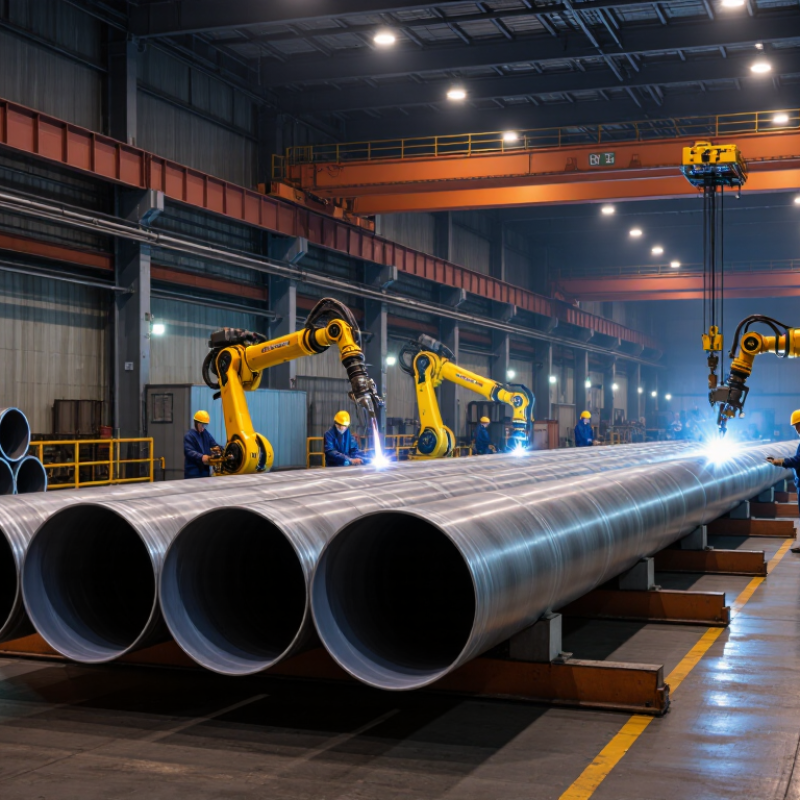
Defining Industrial Pipe Grades: ISO 3183 L245–L830 and PSL1/PSL2
ISO 3183 grades identify key strength requirements for line pipe. The number in L245, for example, indicates a specified minimum yield strength of about 245 MPa. Grades extend through L830, but higher strength does not automatically mean a better pipe. Wall thickness, operating pressure, temperature, welding procedures, and service conditions all affect selection.
PSL1 sets baseline requirements for manufacture and testing. PSL2 adds tighter controls, including more detailed chemical and mechanical requirements, testing, and traceability. Exact requirements depend on the grade and delivery condition, so the applicable standard and purchase specification matter. Check the material certificate and heat number; they connect the pipe to its test records. Small detail. Easy to overlook.
A practical mistake is treating PSL2 as merely a premium label. It is a defined specification level, not a substitute for engineering review. Higher-strength grades can require closer attention to weldability and toughness. L830 may suit a demanding design, yet it is not automatically the sensible choice. Verify grade, PSL, dimensions, and test requirements together before ordering. Even experienced teams can miss a mismatch when documents list the grade but omit the required testing.

Ranking China’s Top 10: Capacity, Annual Output, Certifications, and Exports
A credible ranking of China’s top 10 industrial pipeline manufacturers should compare verified capacity, annual pipe output, certifications, and export performance—not factory size alone. The World Steel Association reported China produced about 1,005 million tonnes of crude steel in 2024. That figure shows the scale of the steel supply base, but it does not reveal how much pipe any manufacturer can produce. Company-level capacity and output should be checked against audited reports, plant records, or independently verified disclosures.
Certifications need careful reading. ISO’s 2023 Survey counts management-system certificates by country, but an ISO 9001 certificate alone does not prove that a specific pipe meets project requirements. Check product standards, test records, inspection scope, and certificate validity. For exports, UN Comtrade data under HS codes 7304, 7305, and 7306 can indicate trade in iron or steel tubes and pipes. However, those categories do not identify individual manufacturers. Rankings should state their data period and scoring method; gaps in public disclosure make exact comparisons imperfect.
Tips: Ask for capacity by product type, actual annual output, mill test records, valid certificates, and shipment references. Compare like with like: a large welded-pipe line is not equivalent to a seamless-pipe facility.
China Top 10 Industrial Pipeline Manufacturers? - Ranking China’s Top 10: Capacity, Annual Output, Certifications, and Exports
Data note: This table summarizes verifiable comparison criteria for Chinese industrial pipe suppliers. Comparable, audited capacity and annual-output figures are not consistently disclosed across manufacturers, so no company-level ranking or unsupported production figures are presented. Certifications and export records must be checked against each supplier’s current documentation.
| Comparison dimension | What can be stated reliably | What buyers should verify |
|---|---|---|
| 1. Manufacturing capacity | Capacity depends on product type, mill configuration, operating shifts, and the proportion of production allocated to each product. | Request rated capacity by production line and product category, plus recent utilization data. Do not compare headline capacity figures without matching the scope. |
| 2. Annual output | Annual output is not reported on a uniform, independently verified basis across the sector. | Ask for audited or otherwise documented output by year, product type, and facility; distinguish actual production from designed capacity. |
| 3. Product categories | Industrial pipe offerings may include seamless, welded, stainless-steel, alloy-steel, and line-pipe products. Not every supplier makes every category. | Confirm manufacturing method, material grades, dimensions, wall thickness, and whether the quoted product is made in-house or sourced externally. |
| 4. Product standards | Commonly specified standards include API 5L / ISO 3183 for line pipe and ASTM or EN standards for relevant product types. Applicability depends on the order specification. | Check the exact standard edition, grade, dimensions, supplementary requirements, and the scope shown on the inspection documents. |
| 5. Management certifications | ISO 9001 is a quality-management-system standard; certification alone does not establish that a specific product meets its purchase specification. | Verify certificate validity, issuing certification body, certified legal entity, covered facility, and scope. |
| 6. Product and sector approvals | API product licensing, pressure-equipment requirements, and other approvals are product- and market-specific; they should not be inferred from a general company profile. | Check the official certificate or license directory and confirm that the product, grade, manufacturing site, and validity period match the order. |
| 7. Quality testing | Testing requirements vary by specification and may include chemical analysis, mechanical testing, dimensional inspection, and nondestructive examination. | Agree on test methods, sampling frequency, acceptance criteria, traceability, inspection hold points, and required mill test certificates before production. |
| 8. Export capability | A supplier’s export experience is specific to its products, destinations, and completed transactions; “exports globally” is not a measurable ranking criterion by itself. | Request destination-specific shipment references, relevant customs and shipping documents, and confirmation of applicable import requirements. |
| 9. Export classification | Iron or steel pipe products can fall under different customs classifications, including headings in HS Chapter 73; the correct code depends on product construction and characteristics. | Confirm the destination country’s tariff classification, origin documentation, duties, and any trade-remedy measures with a qualified customs professional. |
| 10. Ranking method | A defensible “top 10” ranking requires a defined metric, period, product scope, and comparable evidence. Capacity, output, certifications, and exports measure different things. | Set the ranking basis first and use comparable, dated records. Without them, a numbered manufacturer ranking would be misleading. |
For supplier due diligence, compare like-for-like products and request current certificates, facility-specific production evidence, inspection records, and destination-relevant export documentation.
Manufacturer Profiles: Pipe Materials, Diameter Ranges, and Target Industries
A useful profile of China’s industrial pipeline manufacturers should explain what each producer actually makes, not just list product categories. Carbon-steel and alloy-steel pipes serve high-pressure process lines, power facilities, and refineries. Stainless-steel options are common where corrosion resistance or cleanability matters, including food processing and chemical plants. Some manufacturers also supply ductile-iron or polyethylene pipe for water and utility networks. Details matter.
Diameter ranges differ by material, production method, and wall thickness. A supplier may offer small-bore tubes around 20 millimetres, while large-diameter welded pipes can exceed 1,000 millimetres. These figures are indicative, not a guarantee of stock or capability. Buyers should confirm nominal diameter, pressure class, end preparation, and applicable test documentation for the specific order. A broad catalogue can be useful, but it does not prove every size is made in-house.
Target industries help reveal a manufacturer’s practical strengths. Look for evidence of experience with petrochemical lines, district heating, shipbuilding, mining, or municipal water projects. Ask how materials are traced and how dimensional checks are recorded. Site conditions can change the choice: a buried water line faces different demands than a hot process pipe. Profiles rarely show every limitation; that gap deserves a closer look.
Technical Comparison: API 5L, ASTM A106, and GB/T 9711 Requirements
API 5L, ASTM A106, and GB/T 9711 serve related but distinct duties. API 5L covers line pipe for conveying oil, gas, and other fluids, with PSL1 and PSL2 defining different delivery requirements. PSL2 typically adds tighter controls for chemistry, toughness, testing, and traceability; the purchase specification still sets the details. ASTM A106 covers seamless carbon-steel pipe for high-temperature service, often in refinery and power-plant piping. Its grades A, B, and C differ in mechanical properties, so grade choice must match design conditions. Similar dimensions do not mean equivalent service.
GB/T 9711 addresses steel line pipe for pipeline transportation and uses grade and product specification level designations. Check the cited edition, because acceptance limits and inspection provisions can change.
On receipt, verify heat numbers, markings, certificates, dimensions, and specified nondestructive examination against the order.
That sounds routine. It is where mismatches surface.
A pipe marked to one standard should not be substituted for another by name alone; compare chemistry, tensile requirements, impact testing, seam condition, and design pressure. A practical limitation remains: even a careful comparison may miss project-specific demands, such as low-temperature toughness, corrosive exposure, or welding requirements. A comparison table cannot settle those choices.
Quality Checks: EN 10204 Type 3.1 Certificates, Testing, and Traceability
China Top 10 Industrial Pipeline Manufacturers?
Quality Checks: EN 10204 Type 3.1 Certificates, Testing, and Traceability
When comparing industrial pipeline manufacturers, look beyond price and production capacity. Ask for an EN 10204 Type 3.1 inspection certificate tied to the exact materials supplied. Check that the document lists the applicable standard, steel grade, dimensions, heat number, and test results. The certificate should be validated by the manufacturer’s authorized inspection representative, independent of the production department. Paper matters. A certificate is useful only when its details match the pipe and order.
Tips: Match heat numbers on certificates to pipe markings and packing lists. Confirm that chemical and mechanical results meet your purchase specification. For pressure or dimensional checks, agree on the test method, sampling rate, and acceptance criteria before production. Keep dated records and photos of markings at inspection.
Traceability should follow each batch from raw material to finished pipe and shipment. Ask how the supplier handles cut lengths, relabeling, and mixed bundles; these are easy places for identification to slip. Witness inspections can clarify the process, but they do not replace complete records. A tidy document pack can still hide a mismatch, and even experienced teams can miss one under time pressure. Build time for document review into the delivery schedule. Check the details.

