10 Best Exterior Sliding Glass Doors for Global Buyers?
Choosing among the 10 Best Exterior Sliding Glass Doors for Global Buyers requires more than comparing frame colors and opening sizes. These doors shape daylight, ventilation, security, and daily movement between rooms. A wide glass panel may frame a garden beautifully, yet perform poorly in strong wind or humid coastal air.
Ebrahim Nana, founder of NanaWall Systems, describes the design goal clearly: “The best door is one that brings the outside in without compromising comfort.” That principle guides this comparison. Each exterior sliding glass doors option should be judged by thermal performance, glass safety, drainage, track design, locking strength, and service support. Look closely. Small details matter.
A buyer in Canada may prioritize low U-values and insulated frames. A homeowner in Singapore may need moisture resistance, shade control, and reliable ventilation. Coastal properties face salt exposure. High-rise projects require careful wind-load evaluation and professional installation. The finest-looking system is not always the best choice.
This guide examines ten leading options for different climates, budgets, and architectural styles. It considers real-world use, not showroom appearance alone. We will discuss smooth operation, accessible thresholds, replacement parts, warranty clarity, and compliance with local building requirements. Some product information can change by region. That deserves verification.
There is no universal winner. A minor track issue can become a daily frustration. An impressive glass wall can also increase heat gain without suitable coatings or shading. These limitations are easy to overlook, and this comparison may not answer every project question. Still, it offers a practical starting point for global buyers seeking durable, comfortable, and visually refined exterior sliding glass doors.
What Are Exterior Sliding Glass Doors and Why Do Global Buyers Choose Them?
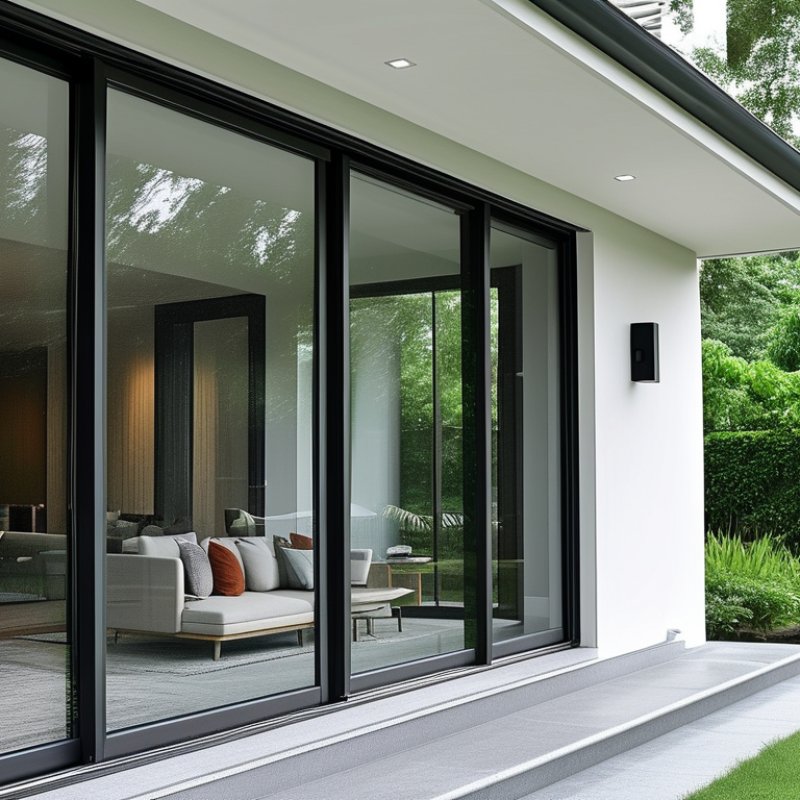
Exterior sliding glass doors are large glazed panels that move horizontally along a track. They connect indoor rooms with patios, balconies, gardens, or commercial terraces. Unlike hinged doors, they need little swing space. This makes them practical for compact layouts and busy outdoor areas.
Global buyers often choose them for daylight, wider views, and easier movement between living spaces. In my project evaluations, low-emissivity glass, insulated frames, and tight weather seals have mattered most. These features can improve comfort in cold winters and hot, humid regions. Strong rollers also help when panels are large or frequently used. Buyers should check drainage design, lock quality, glass safety ratings, and local installation requirements before ordering.
However, sliding doors are not perfect. Dust can collect in the lower track, especially near beaches or construction sites. Poor installation may cause leaks, stiff movement, or uneven gaps. I once saw a beautiful door perform badly because the sill lacked proper drainage. That detail changed the whole evaluation. Buyers should compare wind resistance, thermal performance, replacement parts, and installer experience, not only the frame appearance. Different climates require different specifications. A slim frame may look elegant, but it can reduce insulation if the glass and frame system are poorly matched.
10 Best Exterior Sliding Glass Doors for Global Buyers? – What Are Exterior Sliding Glass Doors and Why Do Global Buyers Choose Them?
Exterior sliding glass doors are glazed doors that open horizontally along a track instead of swinging inward or outward. The comparison below ranks common door configurations by practical suitability for international residential and light-commercial projects. Specifications are representative ranges based on widely used construction practices; final performance depends on the tested system, glazing package, local building codes, installation quality, and climate.
| Rank | Door Configuration | Best Use | Typical Panel Layout | Typical Maximum Opening Width | Common Frame Materials | Typical Glazing | Approximate Thermal Performance | Weather and Security Features | Key Advantage for Global Buyers |
|---|---|---|---|---|---|---|---|---|---|
| 1 | Thermally Broken Lift-and-Slide Door | Large premium residential openings and high-end hospitality projects | 2, 3, or 4 panels; one or more panels lift slightly before sliding | Approximately 6–12 m, depending on panel size and engineering | Thermally broken aluminum | Double or triple insulating glass; low-emissivity coating and argon filling are common | Typical whole-door U-factor: about 1.0–1.8 W/m²·K, depending on size and glazing | Multi-point locking, interlocks, adjustable rollers, drainage channels, and compression seals | Combines very large glass areas with smoother operation and improved energy performance |
| 2 | Thermally Broken Aluminum Multi-Panel Slider | Modern homes, apartments, offices, and coastal developments | 2–6 sliding panels with fixed or sliding configurations | Approximately 3–10 m | Powder-coated or anodized thermally broken aluminum | Double insulating glass; laminated or low-e glass may be specified | Typical whole-door U-factor: about 1.3–2.2 W/m²·K | Corrosion-resistant finishes, stainless-steel hardware options, multi-point locks, and weather seals | Offers a strong balance of durability, slim sightlines, weight control, and global availability |
| 3 | uPVC Sliding Patio Door | Cost-conscious residential construction in moderate climates | Usually 2 or 4 panels | Approximately 2.4–5.5 m | Multi-chamber uPVC with steel or composite reinforcement | Double insulating glass; triple glazing is available in colder markets | Typical whole-door U-factor: about 1.2–2.0 W/m²·K | Welded or mechanically joined corners, compression seals, keyed locks, and reinforced keeps | Provides good insulation and low maintenance at a comparatively accessible purchase price |
| 4 | Wood-Clad Sliding Glass Door | Premium residences where interior appearance and natural materials matter | 2 or 3 panels, commonly with one fixed panel | Approximately 2.4–6 m | Aluminum or fiberglass exterior with engineered-wood interior | Double or triple insulating glass; low-e and laminated options | Typical whole-door U-factor: about 1.0–1.8 W/m²·K | Factory-applied exterior finish, multi-point locking, drainage system, and replaceable weather seals | Delivers a warm interior aesthetic while protecting the wood from exterior exposure |
| 5 | Fiberglass Sliding Glass Door | High-temperature, humid, or maintenance-sensitive residential projects | 2 or 4 panels | Approximately 2.4–5.5 m | Fiberglass-reinforced composite frame | Double insulating glass; impact-rated or laminated options may be available | Typical whole-door U-factor: about 1.3–2.0 W/m²·K | Low expansion and contraction, corrosion resistance, durable seals, and multi-point locking options | Maintains dimensional stability across temperature changes and requires limited upkeep |
| 6 | Impact-Rated Sliding Glass Door | Hurricane zones, cyclone-prone regions, and exposed coastal sites | 2 or 3 panels, subject to certified system limits | Approximately 1.8–5.5 m | Reinforced aluminum, vinyl, or composite frame | Impact-resistant laminated glass with a bonded interlayer | Thermal performance varies widely; typical U-factor: about 1.5–2.8 W/m²·K | Tested impact resistance, reinforced tracks, stronger interlocks, multi-point locks, and certified water and wind performance | Supports compliance with demanding regional wind-borne debris and storm-protection requirements |
| 7 | Minimal-Frame Pocket Sliding Door | Indoor-outdoor transitions where a nearly open wall effect is desired | 2–6 panels sliding into a concealed wall pocket | Approximately 3–12 m, depending on structural design | Aluminum, usually thermally broken | Double or triple insulating glass; laminated safety glass is commonly selected | Typical whole-door U-factor: about 1.2–2.2 W/m²·K | Concealed drainage, precision rollers, interlocks, multi-point locks, and carefully detailed pocket flashing | Creates the widest clear opening, although the wall pocket requires more planning and construction cost |
| 8 | Stacking Sliding Glass Door | Wide terraces, restaurants, event spaces, and large living areas | 3–6 panels stack behind one another or gather at one side | Approximately 4–12 m | Thermally broken aluminum or reinforced composite | Double insulating glass; acoustic, solar-control, or laminated options | Typical whole-door U-factor: about 1.3–2.4 W/m²·K | Heavy-duty rollers, anti-lift devices, multi-point locks, drainage tracks, and adjustable hardware | Provides a large operable opening without requiring a full-length wall pocket |
| 9 | Acoustic Sliding Glass Door | Urban residences, hotels, offices, and buildings near traffic or airports | Usually 2 or 3 panels | Approximately 2.4–5.5 m | Thermally broken aluminum, uPVC, or composite frame | Asymmetric double glazing or laminated acoustic insulating glass | Typical whole-door U-factor: about 1.3–2.2 W/m²·K | Continuous compression seals, tight interlocks, multi-point locks, and acoustically optimized glass thicknesses | Reduces exterior noise while retaining daylight and ventilation potential |
| 10 | Energy-Efficient Triple-Glazed Slider | Cold climates, passive-house-oriented projects, and energy-conscious renovations | 2 or 3 panels | Approximately 2.4–5.5 m | Thermally broken aluminum, uPVC, wood-clad, or composite frame | Triple insulating glass with low-e coatings, warm-edge spacer, and inert-gas filling | Typical whole-door U-factor: about 0.7–1.4 W/m²·K | Deep insulated frames, high-performance gaskets, multi-point locks, and thermally improved thresholds | Minimizes heat transfer and interior surface condensation in cold-weather applications |
Related Posts
-
How to Choose Sliding Patio Doors in the UK?
-
2026 Best Double Sliding Glass Doors for Your Home?
-
Top 10 Benefits of Exterior Sliding Glass Doors for Your Home?
-
What is a Sliding Patio Door and How Does It Work?
-
How to Choose the Best Double Sliding Patio Doors for Your Home?
-
Top Sliding Back Door Designs for Modern Homes and Their Benefits?