Who Are the Top Glass Patio Doors Manufacturers in China?
Choosing glass patio doors from China is not simply a matter of comparing prices. Buyers also need to examine frame materials, glass specifications, hardware, production consistency, and after-sales support. A slim aluminum frame may look elegant in a showroom, yet the finished door must still slide smoothly and seal reliably. Small details matter.
Building-science researcher Stephen Selkowitz has studied window performance and related technologies. A fair paraphrase of his guidance—not a verbatim quotation—is: “Balance daylight, comfort, and energy performance.” That principle offers a useful way to assess manufacturers. Ask how they specify glazing, manage air and water sealing, and test complete door systems. Request product data and sample details, not just polished catalog images.
This guide introduces notable Chinese manufacturers and the factors that can help buyers compare them. It considers product range, customization, manufacturing capability, and the evidence companies provide for performance claims. A factory visit or independent inspection may reveal more than a sales presentation, though neither guarantees trouble-free delivery. Specifications can differ by model, project, and export market, so verify the exact configuration before placing an order. There is no universal winner. The best choice depends on opening size, climate, installation conditions, budget, and the quality of communication after the first quotation. Be cautious of broad claims without supporting documents. And check the details.
What Defines a Glass Patio Door in China’s Building Industry?
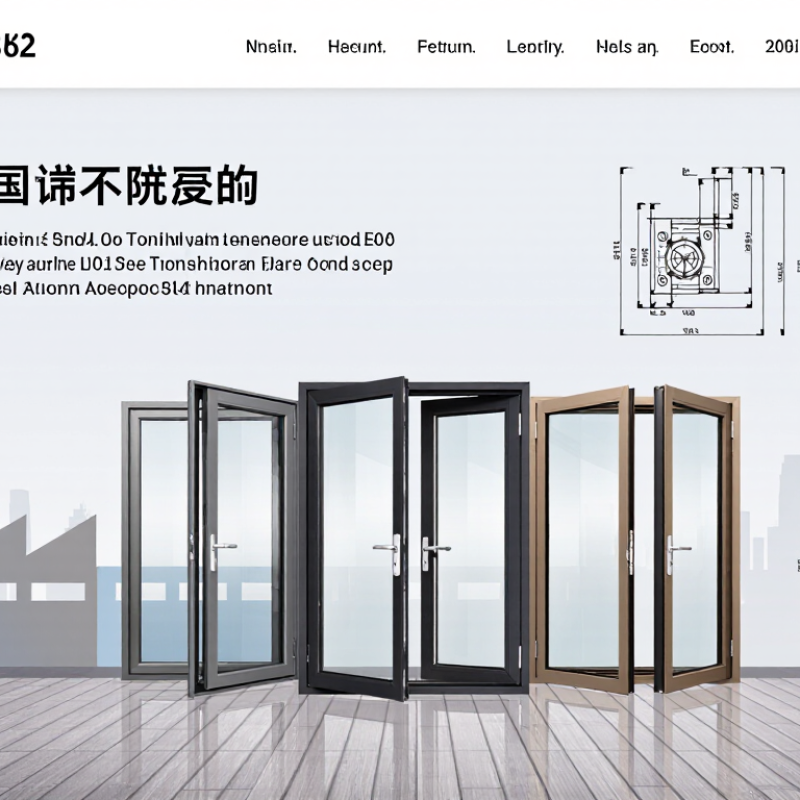
In China’s building industry, a glass patio door is a complete opening system, not just a wide pane of glass. It typically combines a glazed sash, a supporting frame, tracks or hinges, weather seals, and locking hardware. Sliding designs are common where outdoor space is limited; folding or hinged styles suit other layouts. The door connects rooms with balconies, courtyards, or gardens while admitting daylight. Small details matter.
Specifications depend on the building and its location. A coastal apartment may need careful attention to wind pressure and corrosion, while a home in a colder region may prioritize insulation and airtightness. Glass can be single or double glazed, with tempered or laminated options selected for project needs. Frame material, drainage paths, seal quality, and installation tolerances also affect comfort and service life. There is no single configuration that fits every Chinese project.
Manufacturers may offer different sizes, frame profiles, and glazing combinations, but a polished sample does not prove reliable performance. Ask for project-specific test information and check how the door handles water, air leakage, and operation. On site, uneven floors or poorly adjusted rollers can make a good system feel disappointing. That part is easy to overlook. A careful assessment should consider both the product and the opening where it will be installed.
Which Performance Ratings Apply Under GB/T 7106-2019’s 8 Air, 6 Water, and 9 Wind Grades?
GB/T 7106-2019 classifies exterior doors and windows across three separate tests: air permeability has eight grades, water tightness six, and wind-load resistance nine. Higher grades indicate stronger tested performance, but the numbers are not interchangeable. A Grade 8 air result, for example, means the measured leakage is no more than 1.0 m³/(m·h) and 3.0 m³/(m²·h). Small differences matter when comparing large sliding panels.
For water resistance, Grade 6 starts at a test pressure of 700 Pa. Wind resistance reaches Grade 9 at 5.0 kPa or above. These thresholds come from the grading tables in GB/T 7106-2019, the relevant national test standard. Ask suppliers for the laboratory report, not only a product brochure. Check that the tested specimen matches the offered door’s dimensions, opening style, frame, and seals. A stronger rating may cost more, and may not be necessary for every site.
For exposed coastal homes or upper floors, wind and water results deserve close attention; local exposure still matters. Air leakage affects comfort and energy use, but a high grade alone cannot predict installation quality. Review the reported test pressures and leakage figures side by side. It is an imperfect comparison when specimens differ, so note those differences rather than treating one grade as a complete verdict.
GB/T 7106-2019: Performance Grade Scales
The chart compares the number of classification grades in each test category. A higher grade generally represents stronger performance within that category; grade numbers are not directly comparable across categories.
Grade scales shown: air permeability 1–8, water tightness 1–6, and wind pressure resistance 1–9. These are standard classification ranges, not ratings for any specific manufacturer or product.
How Do Frame Materials and Glass Configurations Distinguish Chinese Manufacturers?
Frame materials shape both appearance and performance. Thermally broken aluminum supports wide openings and slim sightlines, useful when a patio door must frame a garden view. The break reduces heat transfer through the metal, though performance still depends on seals and installation. uPVC can offer strong insulation and low maintenance, but its profiles may look bulkier. Timber brings warmth and can be repaired, yet it needs regular coating in damp or sunny locations. Composite frames combine materials, but their construction and finish vary.
Glass configurations distinguish suppliers just as clearly. Double glazing is common; low-emissivity coatings and gas-filled cavities can improve insulation when correctly specified. Triple glazing may help in colder climates, but adds weight and can require stronger hardware. Laminated glass holds together when cracked, while tempered glass is designed to break into smaller pieces. Small details matter. Ask for glass thickness, spacer type, tested air leakage, and whole-door thermal data—not just a center-of-glass figure.
For Chinese manufacturers, compare drawings, sample corners, drainage paths, and hardware capacity alongside quoted specifications. A heavy sliding panel should move smoothly without scraping, even after repeated operation. One caveat. A polished sample does not prove consistent production, so request documented test results and inspect finished units before shipment. I would not choose by frame material alone; the right balance depends on climate, opening size, and maintenance expectations.
Who Are China’s Leading Glass Patio Door Manufacturers by Product and Export Focus?
China’s leading glass patio-door suppliers are best compared by product engineering and export readiness, not by one ranking. Some specialize in thermally broken aluminum sliders, with multi-point locks, low-emissivity double glazing, and reinforced rollers for wide openings. Others focus on uPVC frames or custom lift-and-slide systems. Details matter. Ask for tested air leakage, water penetration, wind-load results, glass specifications, and hardware-cycle records. A polished sample says little about a three-meter panel in daily use.
Export specialists also document packaging, installation drawings, spare rollers, and container loading—not just factory prices. The IEA’s 2023 Buildings report attributes about 30% of global final energy use to buildings and roughly 26% of energy-related emissions. That makes thermal breaks and glazing specifications commercially relevant.
UN Comtrade’s HS 761010 category tracks aluminum doors and windows, but does not isolate glazed patio doors. Public trade totals therefore cannot reliably identify the leading patio-door exporter. A useful caveat. Buyers should compare recent project references, independent test reports, and experience shipping to their destination market; export-leadership claims need evidence.
How Can Buyers Verify Suppliers Through Test Reports, Certifications, and Factory Data?
A supplier’s polished catalogue is not proof of a patio door’s performance. Ask for complete test reports from an ISO/IEC 17025-accredited laboratory, then check the lab’s accreditation scope and report date. Confirm the tested model matches your order: frame material, glass build-up, seals, hardware, and opening size all matter. Look for results covering air leakage, water penetration, and structural load under standards accepted in your destination market. A certificate may cover one configuration, not every product in a factory. Paper is not performance.
Tips: Request the original report, not a cropped screenshot. Compare model codes and test dimensions line by line. The U.S. Department of Energy estimates that windows account for 25–30% of residential heating and cooling energy use. That makes glazing and air-leakage evidence worth checking, not just the certificate logo.
Factory data can help test whether documentation reflects routine production. Ask for recent calibration records, inspection checklists, batch traceability, and defect or rework rates, with dates and sample sizes. A video call can show the test equipment and labels on finished doors, but it cannot replace an independent audit. I would also ask how the factory handles a failed test; answers can be imperfect, and that is useful to learn. Verify any claimed certification directly with its issuing body before placing a large order.
Related Posts
-
Find the Best Sliding Glass Doors for Your Home Today
-

How to Choose the Best Sliding Back Door for Your Home?
-
Best Sliding Patio Doors Tips for Your Home Upgrade?
-
2026 How to Choose Aluminium Sliding Doors for Your Home?
-

Top Benefits of Sliding French Doors for Your Home Transformation
-

Unlock Your Home’s Potential: A Comprehensive Guide to the Best Sliding Patio Doors for 2023