China Best External Sliding Doors for Global Buyers?

Choosing the best China-made external sliding doors requires more than comparing online prices. Global buyers need dependable performance, accurate specifications, and responsive supplier support. This guide examines how to evaluate sliding doors external systems for homes, hotels, offices, and commercial projects.

Practical experience shows that small details often decide long-term satisfaction. Check the aluminum profile thickness, glass configuration, roller quality, drainage design, and locking structure. A door may look impressive in product photos. It can still fail when exposed to coastal wind, heavy rain, dust, or daily operation. Weather seals should fit tightly. Rollers should move smoothly without excessive noise. Frames must arrive protected and dimensionally accurate.

Reliable sourcing also depends on factory verification. Request material data, test reports, installation drawings, sample approvals, and clear production timelines. Confirm whether the supplier supports customized sizes, hardware options, packaging requirements, and replacement parts. Ask how quality inspections are recorded before shipment. A confident supplier should explain limitations, not only promote advantages.

“Best” is not universal. A thermally insulated system may suit a cold region, while a simpler design may work better indoors. Buyers sometimes focus too heavily on the lowest quotation. That mistake can create installation delays, damaged glass, or expensive replacements. I would also question impressive claims without measurable evidence. Compare several factories carefully, test a physical sample where possible, and match the door system to local climate, building use, and installer experience. Good decisions come from evidence, not attractive images alone.
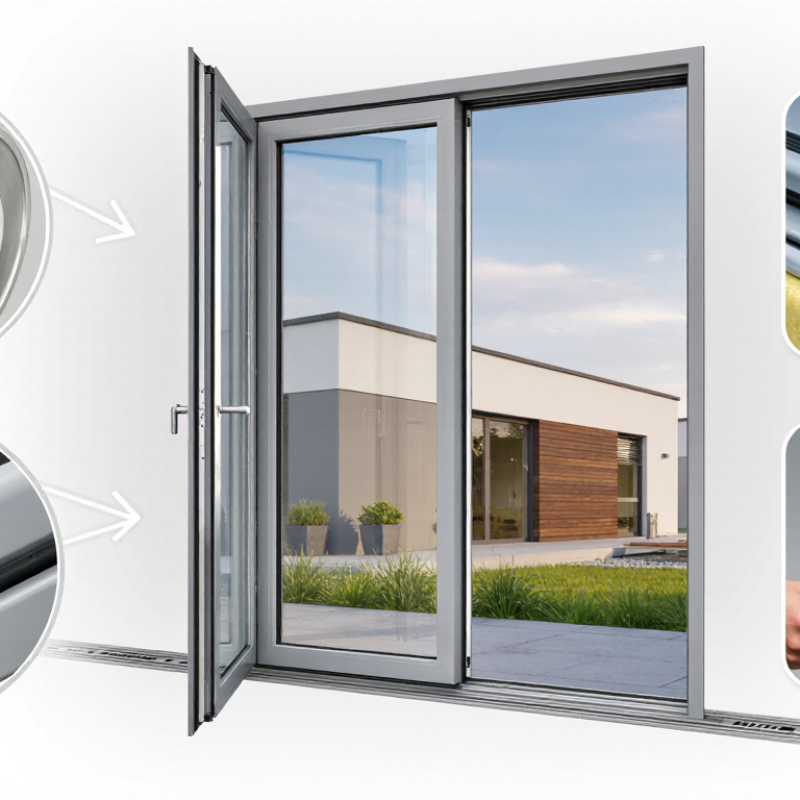
China Best External Sliding Doors for Global Buyers?

What Makes External Sliding Doors Suitable for Global Buyers

External sliding doors can suit global buyers when performance matters more than appearance alone. Their wide openings improve daylight, ventilation, and access to terraces. However, large glass areas may increase heat gain in hot regions. The U.S. Department of Energy reports that windows can cause 25–30% of residential heating and cooling energy use. This makes low-emissivity glass, insulated frames, and tight seals important choices. In colder climates, buyers should request tested U-values. ISO 10077-1 provides methods for calculating thermal transmittance in doors and windows.

International suitability also depends on drainage, wind resistance, hardware, and installation quality. The 2023 UNEP Global Status Report for Buildings and Construction found that buildings consumed about 34% of global energy and produced around 37% of energy-related carbon emissions in 2022. Better doors cannot solve this alone. They can reduce avoidable losses when designed correctly. In project inspections, poor alignment often creates more problems than the frame material. That detail is easy to overlook.

Tips: Ask for air, water, and wind-load test results, not only product photos. Confirm glass specifications, corrosion protection, and replacement-part availability. Check whether the door meets local standards, including NFRC or equivalent ratings where relevant. A lower purchase price may become expensive after shipping, installation, and adjustment. Buyers should also verify opening size, threshold height, and drainage before production. Some assumptions will fail. Regional climate data should guide the final specification.

Main Types and Configurations of External Sliding Doors

China Best External Sliding Doors for Global Buyers?

Main Types and Configurations of External Sliding Doors

External sliding doors vary by opening size, climate, and daily use. The main types include two-panel, three-panel, and four-panel systems. Two-panel doors suit compact patios and apartment balconies. Larger openings often require multi-panel configurations, with one or more panels sliding behind fixed glass. Pocket systems disappear into wall cavities, while stacking systems gather panels beside the opening.

Frame materials affect performance. Thermally broken aluminum offers strength and slimmer sightlines. uPVC provides practical insulation and lower maintenance. Timber creates warmth, but it needs regular surface protection in wet climates. Glass choices also matter. Double glazing supports energy control, while laminated glass improves safety and reduces noise. Low-emissivity coatings can help in strong sunlight.

Track design deserves close attention. A low-threshold track improves accessibility, but it may need better drainage planning. Raised tracks resist water more effectively, yet they can create a trip edge. Rollers should match the panel weight, not just the door size. On real installations, poor alignment often causes more trouble than the frame material. Measure twice. Hardware should resist corrosion, especially near coastal air.

Global buyers should request tested air, water, wind, and operating performance. Confirm wall thickness, drainage paths, screen compatibility, and replacement hardware availability. Local conditions can change the best configuration. A beautiful four-panel system may become inconvenient when furniture blocks its travel path. Even experienced teams miss this detail sometimes.

Materials, Glazing, and Weatherproofing Options

Choosing the best external sliding doors from China requires more than comparing prices. Materials, glazing, and weatherproofing determine long-term performance. Aluminum frames suit large openings because they resist warping and offer slim sightlines. Thermally broken profiles reduce heat transfer between indoor and outdoor surfaces. Timber can feel warmer, but it demands more maintenance in wet climates.

Glazing deserves careful attention. Double glazing often balances insulation, weight, and cost. Triple glazing improves thermal control, yet it may require stronger rollers and deeper frames. Low-emissivity glass can limit heat loss, while solar-control glass helps in bright, hot regions. Laminated glass improves safety and reduces noise. Ask for declared U-values, glass thickness, spacer type, and test documentation.

Weatherproofing is where many specifications become less convincing. Check drainage channels, compression seals, corner joints, and sill design. Coastal projects need corrosion-resistant hardware and suitable surface treatments. In areas with heavy rain, a raised threshold and reliable water drainage matter greatly. Wind-load calculations should match the building location and opening size. I have seen attractive doors fail because installers ignored level tolerances. Small gaps become serious problems. Factory quality matters, but installation matters too. A strong product can still perform poorly when the wall is uneven or the flashing is incomplete. Request samples, independent test reports, maintenance guidance, and clear warranty terms before approving a shipment.

China Best External Sliding Doors for Global Buyers: Materials, Glazing, and Weatherproofing

The chart compares typical whole-door thermal transmittance ranges for common external sliding-door combinations. U-values are shown in W/m²K; lower values generally indicate better thermal insulation. Actual performance depends on frame design, glass spacer, panel size, seals, hardware, and installation quality.

For weatherproofing, buyers should also request tested air-permeability, water-tightness, and wind-load classifications under the applicable regional standard. Thermally broken frames, multi-point locking, continuous gaskets, drained tracks, and correctly installed flashing can improve resistance to drafts and wind-driven rain.

Performance, Security, and Energy Efficiency Standards

China’s Best External Sliding Doors for Global Buyers?

Performance, Security, and Energy Efficiency Standards

For global buyers, an external sliding door should be judged by tested performance, not frame appearance. The U.S. Department of Energy reports that windows can cause 25–30% of residential heating and cooling energy use. This figure also highlights the risk of poorly sealed doors. Ask for tested U-factor, solar heat gain coefficient, air leakage, water resistance, and structural load results. Low-emissivity glass, insulated frames, thermal breaks, and adjustable compression seals can reduce heat transfer. However, installation quality still matters. A strong product can perform poorly when the sill is uneven.

Security requires more than a large lock handle. Buyers should request evidence of multi-point locking, laminated glass options, forced-entry testing, and repeated-cycle performance. European resistance classes under EN 1627 and relevant ASTM testing methods offer useful comparison points. The exact requirement depends on the destination market. Door corners, rollers, and lock cylinders deserve close inspection. These small parts often receive less attention than the glass.

The 2023 Global Status Report for Buildings and Construction, published by UNEP’s GlobalABC, states that buildings consumed about 30% of global final energy in 2022. Energy efficiency is therefore a commercial concern, not decoration. Thermal calculations should reflect the complete door assembly, including glass, frame, seals, and threshold. Catalog values may come from ideal laboratory conditions. They are not always equal to field performance. Independent laboratory reports, traceable test dates, and installation instructions provide stronger evidence than sales language. A practical site review may still reveal gaps, condensation, or difficult operation. That is where specifications need honest revision.

How to Select the Best External Sliding Door Supplier

Choosing the best external sliding door supplier requires more than comparing catalog prices. Buildings account for about 30% of global final energy use, according to the International Energy Agency’s Buildings report. Door performance therefore affects comfort, operating costs, and project credibility. Request tested U-values, air leakage, water penetration, and wind-load results for the exact door configuration. Generic laboratory claims are not enough.

Inspect the supplier’s production controls. Ask how aluminum profiles, glass, rollers, seals, and locks are traced from purchase to assembly. Confirm whether testing follows recognized standards, such as ISO, ASTM, EN, or equivalent regional requirements. The U.S. Department of Energy reports that windows can represent 25–30% of residential heating and cooling energy use. Poorly sealed sliding doors can worsen that loss. Check thermal breaks, drainage paths, corner joints, and replacement hardware before ordering.

Visit the factory if possible. Watch one frame being assembled, not only the showroom sample. A sample can still mislead. Review inspection records, packaging tests, warranty terms, and corrective-action procedures. Salt-spray testing matters for coastal projects, while repeated-cycle testing exposes weak rollers and handles. Supplier capacity also deserves evidence: confirm lead times using recent production records, not promises. A low quotation may look attractive, but thinner profiles or unstable components can create expensive site repairs. No factory is perfect; reliable suppliers explain failures clearly and improve their process. Even experienced buyers can overlook installation tolerances, so request detailed drawings and an installation mock-up before mass production.

China Best External Sliding Doors for Global Buyers? - How to Select the Best External Sliding Door Supplier

Evaluation Dimension Recommended Buyer Benchmark Why It Matters Documents or Tests to Request
Product Standard The door system should be tested or assessed against the standards required in the destination market, such as EN 14351-1, ASTM, or local building regulations. Different countries use different requirements for safety, weather resistance, thermal performance, and structural design. Applicable test reports, product declarations, technical specifications, and compliance statements.
Frame Material Select thermally broken aluminium, uPVC, timber, or a composite frame according to climate, design, maintenance requirements, and project budget. Frame material affects strength, insulation, durability, appearance, and long-term maintenance. Material specification, section drawings, surface-finish details, and sample approvals.
Thermal Transmittance Set a project-specific whole-door U-value target. A lower U-value indicates better thermal insulation; the exact requirement depends on the local energy code and climate zone. Improved insulation can reduce heat transfer, condensation risk, and building energy consumption. Whole-door U-value calculation or test report, including the frame, glass, spacer, and opening configuration.
Air Permeability Request a tested air-permeability classification or result suitable for the intended exposure and local building code. Lower air leakage improves indoor comfort, energy efficiency, and resistance to drafts. Air-permeability test report with test pressure, specimen size, and classification method.
Water Tightness Choose a water-tightness rating appropriate for the building height, exposure, local rainfall, wind-driven rain, and installation condition. A suitable rating helps reduce water penetration around the sliding panel, frame, and sill. Water-tightness test report, drainage details, sill design, and installation instructions.
Wind Load Resistance The tested wind-load performance should match the project’s calculated wind pressure, building height, location, and door dimensions. Large glass panels and high-rise installations require adequate structural resistance and safe anchoring. Structural calculations, wind-load test results, maximum panel-size chart, and fixing details.
Glass Configuration Specify insulated, laminated, tempered, or low-emissivity glass according to thermal, safety, acoustic, solar-control, and security requirements. Glass usually represents the largest area of an external sliding door and strongly influences safety and energy performance. Glass build-up, thickness, safety classification, visible-light data, solar-factor data, and spacer specification.
Acoustic Performance Define the required sound-reduction value based on traffic, airport, industrial, or urban noise conditions. Appropriate glazing, seals, frame design, and installation can improve indoor acoustic comfort. Laboratory acoustic test report for the complete door assembly, not glass alone.
Hardware and Rollers Check roller capacity, corrosion resistance, adjustment range, locking points, replacement availability, and compatibility with the door weight. Reliable rollers and hardware support smooth operation, security, and maintainability. Hardware schedule, load rating, cycle-test results, spare-parts list, and maintenance instructions.
Corrosion Resistance For coastal or humid environments, request a finish and hardware specification suitable for salt exposure and verify the relevant corrosion test method. Salt, moisture, and pollutants can damage coatings, fasteners, rollers, and locking components. Surface-finish specification, coating thickness, corrosion-test results, and coastal-environment limitations.
Security Features Evaluate multi-point locking, anti-lift protection, security glazing, reinforced keep sections, and secure handle operation. Sliding doors can be vulnerable at the meeting stile, sill, rollers, and locking points if security is not designed as a complete system. Security test report where required, locking-point drawings, hardware details, and installation instructions.
Drainage and Threshold Confirm internal drainage paths, sill slope, weep-hole design, threshold height, and compatibility with the building waterproofing strategy. The sill is critical for water management and can affect accessibility, weather performance, and installation quality. Section drawings, drainage diagrams, threshold options, and interface details for membranes and flashings.
Size and Configuration Confirm maximum panel width, height, weight, number of tracks, opening direction, fixed panels, corner options, and site access limitations. Oversized panels may require heavier rollers, stronger frames, special handling, and additional structural support. Approved shop drawings, weight calculations, maximum-size table, and lifting or delivery requirements.
Quality-Control Process Prefer a supplier with documented incoming-material inspection, in-process checks, final inspection, dimensional control, and traceability. A repeatable quality system reduces variation between approved samples and mass-produced units. Inspection and test plan, quality records, inspection photos, corrective-action procedure, and pre-shipment inspection option.
Sample Approval Approve a physical sample or representative corner sample before production, including frame finish, glass, hardware, seals, and drainage details. A sample helps identify appearance, operation, tolerances, and interface problems before the full order is manufactured. Signed sample-approval record, finish sample, glass confirmation, and approved drawings.
Packaging and Export Handling Require moisture protection, edge protection, panel separation, clear labeling, shock-sensitive handling instructions, and container-loading records. Proper packaging reduces scratches, glass breakage, deformation, and water damage during international transport. Packing specification, loading photos, carton or crate dimensions, gross weights, and replacement-parts procedure.
Installation Support Select a supplier that provides installation manuals, tolerances, fixing schedules, drainage requirements, adjustment procedures, and technical assistance. Even a well-tested door can underperform if the opening, waterproofing, fixing, shimming, or adjustment is incorrect. Installation manual, method statement, project-specific details, training materials, and remote technical-support process.
Warranty and After-Sales Service Review warranty coverage separately for frames, finishes, glass, hardware, seals, and installation; confirm exclusions and claim procedures. Clear responsibilities help control lifecycle cost and shorten the response time for defects or replacement parts. Written warranty, spare-parts policy, service response procedure, maintenance schedule, and defect-reporting form.
Total Delivered Cost Compare product price, packaging, inland transport, ocean freight, insurance, duties, taxes, unloading, installation, maintenance, and replacement-part costs. The lowest quotation may not provide the lowest total cost after logistics, installation, energy use, and maintenance are included. Itemized quotation, Incoterms, estimated shipment dimensions, lead time, payment schedule, and cost-of-ownership assumptions.