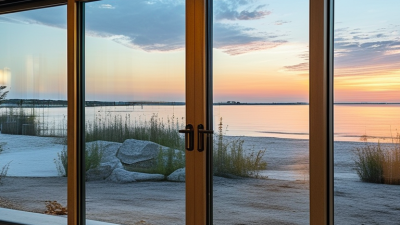
China Best Sliding Glass Doors Cost Guide
China’s sliding glass door market serves apartments, villas, offices, hotels, and retail spaces. Buyers often compare factory prices first. That approach can create expensive surprises later.
The cost of sliding glass doors depends on glass type, frame material, opening size, hardware, surface treatment, packaging, and installation. Tempered glass usually costs less than laminated or insulated glass. Low-E coatings improve thermal performance but raise the quotation. Aluminum frames remain common in China because they are light, durable, and widely available. uPVC and thermally broken aluminum offer different insulation benefits.
Industry data helps establish realistic expectations. Grand View Research identifies energy efficiency and renovation demand as major drivers in the global doors and windows sector. The International Energy Agency also reports that buildings account for roughly 30% of global energy demand. This explains growing interest in insulated glass and improved sealing. China’s GB/T 8478 standard provides important technical guidance for aluminum doors and windows. Buyers should request test documents, not rely only on sales descriptions.
A useful quotation should separate materials, fabrication, hardware, export packing, delivery, taxes, and installation. Small details matter. A balcony opening measuring 2.4 meters may need stronger rollers and thicker glass than expected. Site access can also change labor costs. The cheapest offer is not always the best value. A neat price table can still mislead. This guide compares typical Chinese supply prices, quality levels, specifications, and hidden charges. Figures remain indicative, because exchange rates, project volume, and customization can shift the final cost. Expect some uncertainty. Careful verification is part of responsible sourcing.
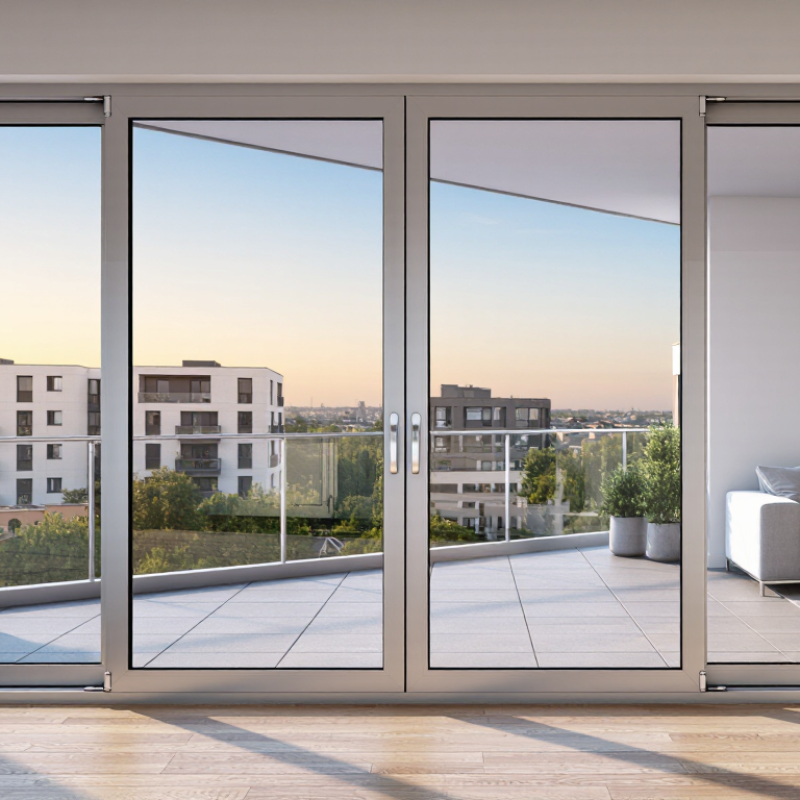
China Sliding Glass Door Types: Aluminum, uPVC, Wood, and Thermal-Break Systems
China sliding glass door prices depend on frame material, glass specification, opening size, hardware, and installation conditions. Aluminum systems usually offer slim sightlines and strong structural support. However, standard aluminum conducts heat quickly. Thermal-break aluminum adds polyamide insulation strips, improving indoor comfort but increasing fabrication cost. A low purchase price can become a false saving.
uPVC doors generally provide strong thermal insulation and require limited maintenance. Their profiles may restrict extra-large panels or premium color finishes.
Wood doors create a warmer, more natural appearance. They need careful sealing, repainting, and moisture control. In humid areas, maintenance is often underestimated.
The U.S. Department of Energy reports that windows can account for about 25–30% of residential heating and cooling energy use. Glass and frame performance therefore deserve equal attention.
For accurate China quotations, request the U-value, solar heat gain coefficient, air-leakage rating, glass thickness, and hardware grade. The National Fenestration Rating Council uses these performance indicators for comparable product testing. Thermal-break systems often suit hot summers, cold winters, or large glazed openings. Still, they are not automatically the best choice. Installation gaps, drainage design, and factory quality can weaken excellent specifications. Ask for test reports, section drawings, packing details, and separate shipping costs before comparing offers.
How Size, Glass Layers, and U-Factor Below 0.30 Affect Door Costs
China Best Sliding Glass Doors Cost Guide: How Size, Glass Layers, and U-Factor Below 0.30 Affect Door Costs
Sliding glass door costs in China depend heavily on opening size and glass construction. A standard two-panel door may cost less than a three-panel system because it uses fewer rollers, frames, and seals. Large openings also require stronger aluminum or thermally broken profiles. One extra meter can change installation complexity sharply. Local project quotations often range widely, so compare specifications, not only the final price.
Glass layers matter. Single glazing is cheaper, but it offers weak insulation and poorer sound control. Double glazing adds an air or argon-filled cavity, increasing material and processing costs. Triple glazing costs more and adds weight, stronger hardware, and stricter installation requirements. The U.S. Department of Energy identifies low-emissivity coatings and insulated glazing as important energy-saving measures. However, performance depends on the complete door assembly, not glass alone.
A U-factor below 0.30 means better heat resistance, but it usually raises the purchase price. The National Fenestration Rating Council measures U-factor for the whole product, including the frame. That distinction is easy to miss. A low glass U-factor does not guarantee a low door U-factor. In practice, expect higher costs for warm-edge spacers, improved seals, and thermally broken frames. The ENERGY STAR technical criteria also show that regional climate requirements can differ. A cheaper door may still be reasonable in a mild climate. I would question any quote promising U-factor below 0.30 without an independent performance label or complete test report.
China Sliding Glass Door Costs: Materials, Hardware, Labor, and Finishing
China Best Sliding Glass Doors Cost Guide
China Sliding Glass Door Costs: Materials, Hardware, Labor, and Finishing
Material choice usually sets the largest part of a sliding glass door’s price. Standard aluminum frames are economical, while thermal-break aluminum costs more but improves insulation. Clear tempered glass is common for homes. Laminated glass adds safety and sound control. Frosted or tinted glass increases the material bill.
Hardware needs careful inspection. Rollers, locks, handles, tracks, and seals affect daily performance. Stainless steel components usually cost more than basic alloy parts. A heavy door may require upgraded rollers and reinforced tracks. Small parts matter.
Labor prices vary by city, door size, wall condition, and installation difficulty. A simple opening may need only a small fitting team. Uneven floors or damaged walls can increase preparation time. Local installation often costs less than specialist export-site service, but quality can vary. Ask for measured drawings, hardware specifications, packing details, and installation terms before ordering.
Finishing costs include powder coating, anodizing, polishing, screen installation, and protective packaging. Custom colors may require minimum quantities. My first estimate was too low because I ignored wall preparation and delivery handling. That mistake is common. A realistic budget should separate factory cost, inland transport, export packing, installation, and possible rework. Keep a contingency of about ten percent for measurement changes or replacement parts.
China Best Sliding Glass Doors Cost Guide
China Sliding Glass Door Costs: Materials, Hardware, Labor, and Finishing
Estimated cost ranges for one standard two-panel sliding glass door unit manufactured and installed in China. Costs are shown in CNY and vary according to dimensions, glass specification, frame material, hardware grade, order volume, location, and installation conditions.
Typical total range: CNY 2,600–7,500 per unit, excluding international freight, taxes, and complex structural modifications.
Factory-to-Site Pricing: EXW, FOB, Freight, Duties, and Installation Fees
China Best Sliding Glass Doors Cost Guide
A factory quote is not the delivered cost. Under EXW terms, the buyer pays pickup, export handling, inland transport, and loading risk. FOB usually includes delivery to the named port and export clearance, but ocean freight remains separate. Confirm the exact Incoterm in writing. Small wording differences can change responsibility.
Freight changes with container size, route, season, and port congestion. Drewry’s World Container Index has repeatedly shown sharp weekly movements, so one freight quote can age quickly. Ask for validity dates and destination charges.
Customs duty depends on the product’s HS classification, declared value, origin, and local tariff rules. The World Customs Organization recommends accurate classification, yet sliding doors can include frames, glass, hardware, and accessories under different interpretations. Check with a licensed customs broker.
Installation is another major cost. NAHB’s 2024 Cost of Constructing a Home survey placed exterior finishes at 13.4% of total construction cost; doors and windows sit within that broader category. Local labor, wall preparation, lifting equipment, flashing, and disposal may add substantial fees.
In field projects, I budget installation separately and keep an 8–12% allowance for surprises. That range is practical, not universal. Site measurements are often imperfect.
A low EXW price can become expensive after freight, duties, storage, and rework. Get a factory packing list, tested dimensions, glass specification, warranty terms, and a complete landed-cost worksheet before payment.
Quality Standards: Air Leakage, Water Resistance, and ASTM/EN Test Ratings
China Best Sliding Glass Doors Cost Guide
Sliding glass door pricing should include testing, not only frame size and glass thickness. Air leakage is measured under ASTM E283 or EN 12207 procedures. Lower leakage usually means better comfort and fewer drafts. The U.S. Department of Energy reports that windows can cause 25% to 30% of residential heating and cooling energy use. A poorly sealed door can therefore increase long-term operating costs.
Water resistance needs separate attention. ASTM E331 evaluates water penetration under controlled pressure, while EN 1027 supports European watertightness classifications. These ratings are not directly interchangeable. Ask suppliers for full test pressure, specimen size, leakage results, and laboratory details. A high rating on paper may not reflect installation quality. That is where buyers often become overconfident.
Tips: Request ASTM E283 and E331 reports for North American projects. For European projects, request EN 1027 and EN 12207 results. Check whether the tested door matches the quoted design. In my experience, this small detail is often missed. Also inspect drainage holes, interlocks, gaskets, and corner joints. A lower-cost door may pass a laboratory test yet perform poorly after careless installation. Allow roughly 5% to 15% of the door budget for verified testing, packaging protection, and installation checks, depending on project complexity.
Related Posts
-
How to Choose Double Sliding Glass Doors in 2026?
-
2026 Top Sliding Glass Door Installation Types Guide
-
What Is the Best Type of Custom Sliding Glass Doors?
-
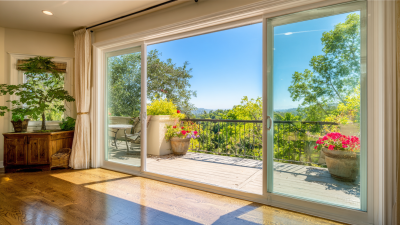
Essential Guide to Sliding Glass Door Replacement: Enhancing Your Home's Aesthetics and Security
-
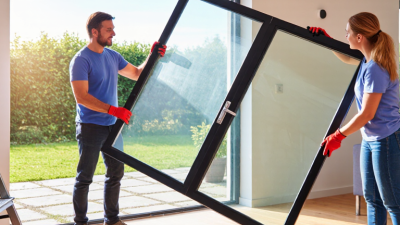
How to Replace a Sliding Glass Door?
-
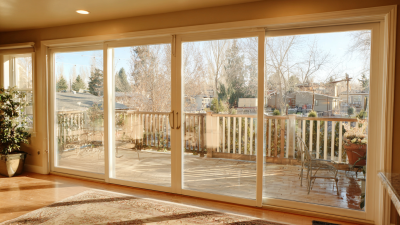
The Ultimate Guide to Choosing the Right Sliding Glass Door Replacement for Your Home